Title Tags, Meta Descriptions, H1 and H2: Their SEO Impact
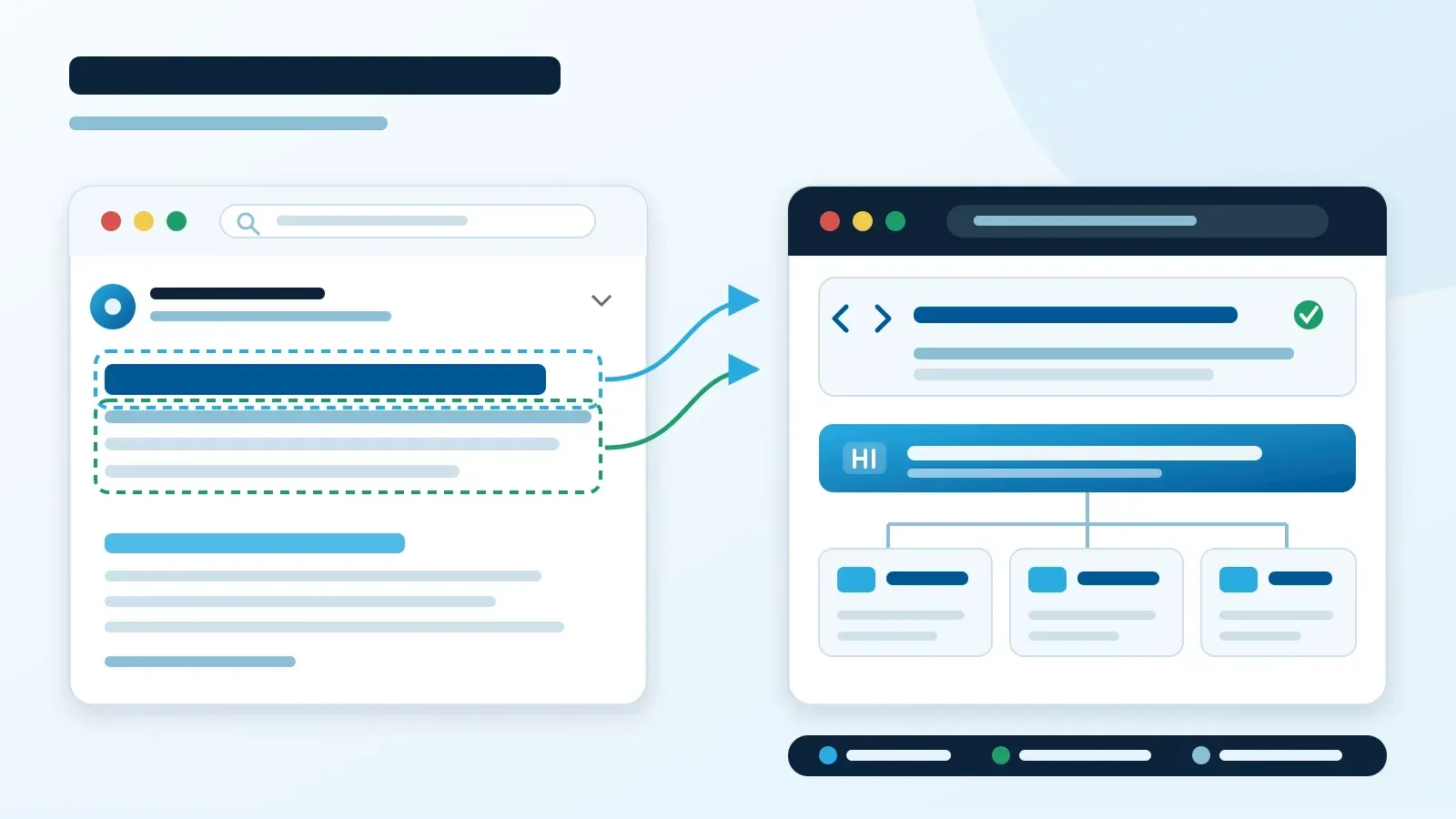
The <title>, meta description, H1, and H2 serve different purposes. Optimize them as one clear page, not four places for the same keyword.
One-minute rules
- Title: write one unique, accurate title for each URL. Keep it concise and put the main subject early. Google may replace it with the H1 or other prominent text. There is no fixed character limit.
- Meta description: summarize the page’s specific value in one or two sentences. Google may use page content instead, so the description is a snippet candidate, not guaranteed search-result text.
- H1: use one clear, visible main heading. It may differ from the title, but both must describe the same search intent.
- H2: divide the page into useful major sections. Use descriptive wording. There is no required number of H2 headings and no ranking benefit from adding empty sections.
Recommended pattern
<title>Cloud Backup for Small Businesses | Example</title>
<meta name="description" content="Compare retention, recovery tests and costs for a small-business cloud backup plan.">
<h1>How to choose cloud backup for a small business</h1>
<h2>Set retention requirements</h2>
<h2>Test recovery time</h2>
<h2>Compare total cost</h2>
The wording varies, but every element supports the same page purpose.
Audit checklist
- Every indexable URL has a unique
<title>and description. - The title, H1, canonical URL, language, and content cover the same subject.
- The main subject appears before optional branding in the title.
- The description states what the visitor will get, without keyword lists.
- One visible H1 identifies the page; H2 headings describe its main sections.
- Heading levels reflect document structure, not font size.
- Open Graph and structured-data titles do not contradict the visible page.
- Changes are checked in rendered HTML and monitored in Search Console, following Google’s SEO Starter Guide.
Judge title and description changes using impressions, clicks, click-through rate, query mix, and average position together. Judge headings by whether users can scan the page and reach the information or action they need.