My First RAG
I built my first RAG in 2019. The task was to create a product that worked like this: send a photo of clothing, the application suggests 10 most similar products and links to various stores.
I needed to gather a database of stores, their products, and photos, then transform those images into vectors and embed them in multidimensional space.
System Architecture
Data Ingestion (Facade & Strategy Pattern)
The project initially assumed using Kafka as a queue system, but with good design patterns — such as facade and strategy — I managed to unify the worker classes:
- Worker querying stores for updated products
- Worker processing images into vectors
- Worker updating multidimensional space
The application handled multiple data providers. Each store had its own strategy for mapping XML fields to a standardized product model.
Image Vectorization Pipeline
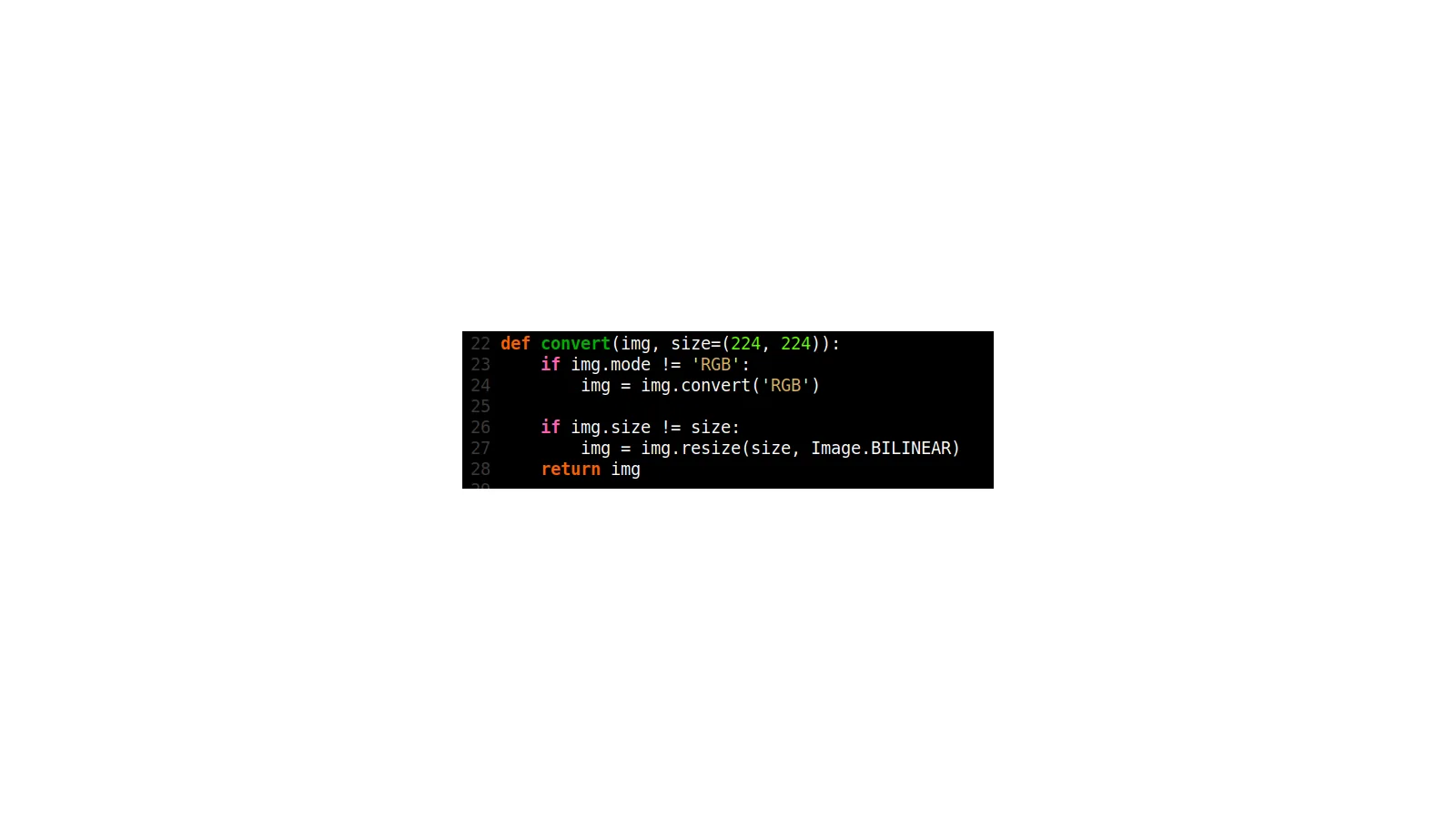
The key element of the RAG system was visual embedding. The application fetched images, scaled them to 224x224px (RGB) — the standard input size for computer vision models — then extracted datasets for computing similarity vectors (KNN).
Indexing and Database
The heart of the system was a PostgreSQL database managed by SQLAlchemy. Products were indexed not only by ID but also in relation to categories and gender, enabling hybrid search capabilities.
Key Features
- Scalability: Thanks to multithreading, image fetching and data updates happen in parallel across multiple stores
- Unified Data Model: Regardless of source, each product lands in the database with the same structure
- Automation: Scripts monitoring changes and automating daily knowledge base updates
- AI-Ready: Database structure designed for integration with Keras or TensorFlow
Greatest Success
Successfully deploying the product to production. All the pieces — from data ingestion, through image processing, to vector search — worked seamlessly together.
What I Would Change Today
The architecture holds up; the components do not. Three things would be different:
- Vector storage. PostgreSQL held the products, but similarity search was computed outside it. Today the vectors live in the same database through
pgvector, and the KNN step becomes a query rather than a service. - The embedding model. A 224x224 CNN feature extractor was the standard choice in 2019. A current multimodal model produces better neighbours and accepts text as a query, which the original system could not do at all.
- The queue. Dropping Kafka in favour of the facade and strategy patterns was right for three worker types. It stops being right the moment retries and ordering become someone’s requirement.
The rule that survived: build the ingestion boundary first and keep every source behind one product model. Model choices aged out in three years. The mapping layer did not.
If you are starting something similar now, read Multimodal RAG for Images instead of copying this design.