I built my first RAG in 2019. The task was to create a product that worked like this: send a photo of clothing, the application suggests 10 most similar products and links to various stores.
I needed to gather a database of stores, their products, and photos, then transform those images into vectors and embed them in multidimensional space.
System Architecture
Data Ingestion (Facade & Strategy Pattern)
The project initially assumed using Kafka as a queue system, but with good design patterns — such as facade and strategy — I managed to unify the worker classes:
- Worker querying stores for updated products
- Worker processing images into vectors
- Worker updating multidimensional space
The application handled multiple data providers. Each store had its own strategy for mapping XML fields to a standardized product model.
Image Vectorization Pipeline
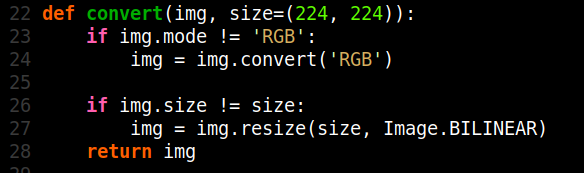
The key element of the RAG system was visual embedding. The application fetched images, scaled them to 224x224px (RGB) — the standard input size for computer vision models — then extracted datasets for computing similarity vectors (KNN).
Indexing and Database
The heart of the system was a PostgreSQL database managed by SQLAlchemy. Products were indexed not only by ID but also in relation to categories and gender, enabling hybrid search capabilities.
Key Features
- Scalability: Thanks to multithreading, image fetching and data updates happen in parallel across multiple stores
- Unified Data Model: Regardless of source, each product lands in the database with the same structure
- Automation: Scripts monitoring changes and automating daily knowledge base updates
- AI-Ready: Database structure designed for integration with Keras or TensorFlow
Greatest Success
Successfully deploying the product to production. All the pieces — from data ingestion, through image processing, to vector search — worked seamlessly together.